Algebra You Can Move.
Tileifying Algebra
What if students could see what algebra is doing instead of only memorizing what they are supposed to do?
Tileifying Algebra turns abstract algebra into a virtual manipulative.
Terms become tiles.
Students can move them, combine them, expand them, divide them, and explore how an equation changes while preserving the mathematics underneath it.
The goal isn’t to replace algebraic notation.
The goal is to make the notation make sense.
Free to use. No ads.
Move the Math.
See Why it Works.
What Exactly Is Tileifying Algebra?
A virtual manipulative for abstract mathematics.
Algebra usually lives on a page.
Letters. Numbers. Symbols. Rules.
Tileifying Algebra takes those same mathematical ideas and turns them into objects students can interact with.
Instead of only being told what happens to an equation, students can move the pieces and see what happens.
Every Term Becomes a Tile
In Tileifying Algebra, the pieces of an expression or equation become visual objects.
A tile can represent things like:
x
3x
−5
(x + 4)
or even a fraction.
The mathematics has not changed.
Only the way the student can interact with it has changed.
Movement Gives the Rules Meaning
Students are often taught rules like:
“Add 2 to both sides of the equation.”
That can work—but it does not necessarily explain why.
Tileifying Algebra lets the student perform the transformation and watch the structure of the equation respond and stay balanced.
The goal is to connect:
what the student does
to
what the algebra means.
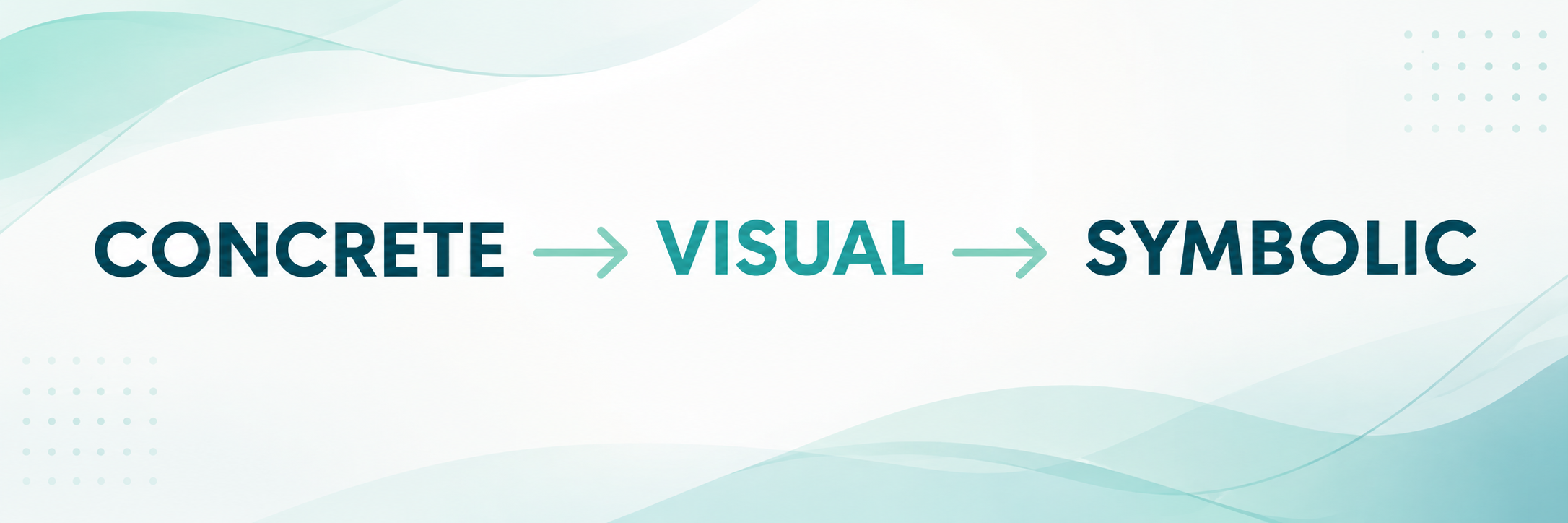
Tileifying Algebra is what I think of as a virtual concrete manipulative.
It gives students something visual and movable to reason about before asking them to rely entirely on abstract symbols.
The end goal is still traditional algebra.
Tileifying is the bridge—not the destination.